
Batteries
EVs, light means of transport (e-bikes, scooters) and industrial batteries above 2 kWh - a full passport under the Battery Regulation (EU) 2023/1542. The only date in the whole calendar that is certain.

 Log in
Create account
Log in
Create account 
Enter your product data, print the QR code, and update the page whenever the rules change. Hosted in the EU, no IT team, no sales call.
Two passports free · no card


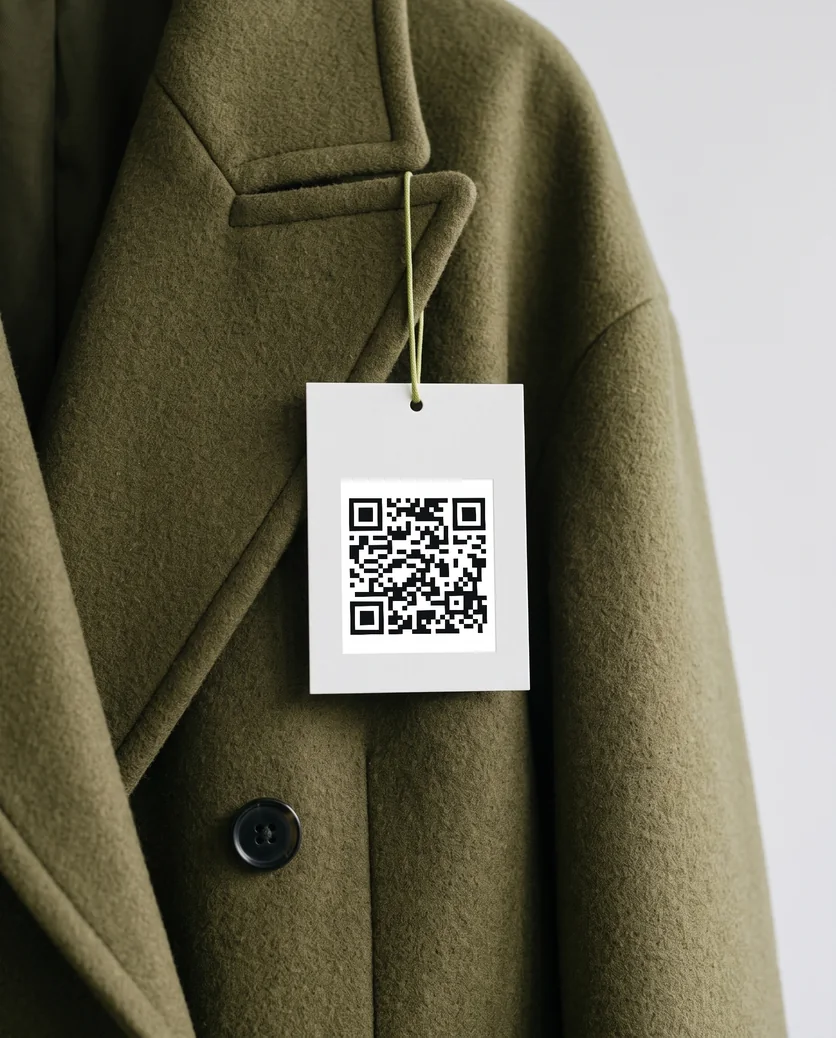
Wool coat 03
Textiles · GS1 Digital Link

Scan it, it works
dppera.com/01/…/10/2026-08-A
The passport obligation comes from ESPR and from sector regulations. Some industries already have a date, others do not yet, and can do it voluntarily to build a market advantage.
EVs, light means of transport (e-bikes, scooters) and industrial batteries above 2 kWh - a full passport under the Battery Regulation (EU) 2023/1542. The only date in the whole calendar that is certain.

Delegated act expected in 2027, obligations at least 18 months later. We already have the data profile mapped from the JRC study.

Delegated act expected in 2028. Direction of work: life cycle, recycled materials, assembly instructions, wood origin.

Some already have their date, others have none. We build passports in both cases, because a product page with a QR code is worth having without compulsion.
The categories under the obligation come in between 2027 and 2031. Companies doing it today are not doing it for an inspector.
A company with a deadline cannot issue a passport for its product without data on your component. Its deadline becomes your deadline, just a few links up the chain earlier and without a regulation naming it.
"Which certificate do you have?", "how do I replace the part?", "what is it made of?". The customer scans the code and has the answer. The manual and the service contact live under a code that is already on the product.
Material origin, production region, place of assembly, certificates. Whoever produces honestly has the most to gain.

Batteries: 18 February 2027, a confirmed date. Further categories through 2031. Doing it without pressure costs less than doing it on the deadline.

Name, composition, origin, certificates. Data you already have - in the technical sheet, in your ERP or in an email from a supplier. Type it in, paste it or upload an Excel file.
You get a permanent address, a passport page and a QR code. The address follows the GS1 Digital Link standard when you have a GTIN, or uses your own product code. It never changes, even if you change the data.
Download the print file - sticker, label, engraving or plate. Send it to your printer or label supplier.
There is not a single "coming soon" item here. Everything below you can check today, on an example passport.

Product data in a form a customer reads on a phone in the shop and an inspector opens on a laptop. No login, no app.

GS1 Digital Link with a GTIN, your own product code, or a short /p/ address. It never changes, even when you change the data behind it.

Vector SVG, CMYK EPS with a pure black code and an NFC payload with the tag capacity calculated. Ready to send to your label supplier.

The same address returns JSON and a GS1 linkset when a machine asks for them. One identifier, two representations - that is what EN 18221 requires.

How many times the code was scanned and when. In every plan, the free one included - because it is the only way to know whether the label works at all.

JSON, CSV and a ZIP with documents, one click, any time. An immutable copy of the passport is created at publication, not on request.
Prices net of VAT. Monthly, or yearly for the price of ten months, with no fixed-term contract and no notice period.
0 zł test it yourself
119 zł net / month
349 zł net / month
Quote individual, no limit
Yearly: 1190 zł and 3490 zł net, i.e. two months free.
Would rather not do it yourself? See the implementation packages
A separate service with a public price. The first product is set up for free.
What a digital product passport is, who it applies to, what data it must contain and how to prepare without buying enterprise software. Enter your email address and we will send you the download link.
Examples · textiles, furniture, batteries
Three passports with full data and a working QR code. You build the same in the panel; your first two are published free, permanently.

Short answers, each with a source on the other side of the link. The longer list lives in the FAQ.
No. A digital product passport is a defined set of structured data with a registered unique identifier, accessible through a data carrier such as a QR code. The code is only the door that opens it. What you build here meets the passport structure today; registration in the EU registry comes when the registry opens it.
Yes. You sign up with an email and a password, no card and no company details. You build the passport in the panel when you have the data at hand, and a draft waits as long as it needs to. The responsible company's details and the product identifier come in when you publish - without them it is not a passport, just a pretty page. Your first two published passports are free.
No. With a GTIN the passport address takes the GS1 Digital Link form. Without one you use your own product code, and the address and QR code work the same way. No EU rule names GS1 as the only way to identify a product.
Your first two permanent passports are free, on an account set up with an email. Paid plans start at 119 zł net per month, or 1190 zł per year, for 50 active passports. Pricing is public - there is no "book a call" here.
The entity placing the product on the EU market, usually the brand. We are the tool provider, not the responsible party, and we will never claim to issue a passport on your behalf.
Keeping a published passport online is paid for at publication and guaranteed for 2 years, or for the period the registry requires if that is longer. Independently of the subscription. You can download the complete data set with one click at any time, including when you have not paid.
Yes. Implementation is a separate service with a public price, not an add-on to a plan. You send the file you already have (Excel, a PDF catalogue) and receive finished passports with print files. The first product is free, so you can see it on your own range first. Packages and available places (in Polish) or the form below.
For almost all products, no. The registry is live and the standards are published, but product obligations start with batteries on 18 February 2027, and for other categories around 2028 and later.
A free account, no card, your first two passports at no cost. And if you would rather have someone else enter your products, leave a request here.