

On 20 July 2026 the European Commission switched on the central EU Digital Product Passport Registry - one day after the legal deadline written into ESPR. It is a real milestone. It is also the source of the single most common misunderstanding about DPP right now.
What actually launched
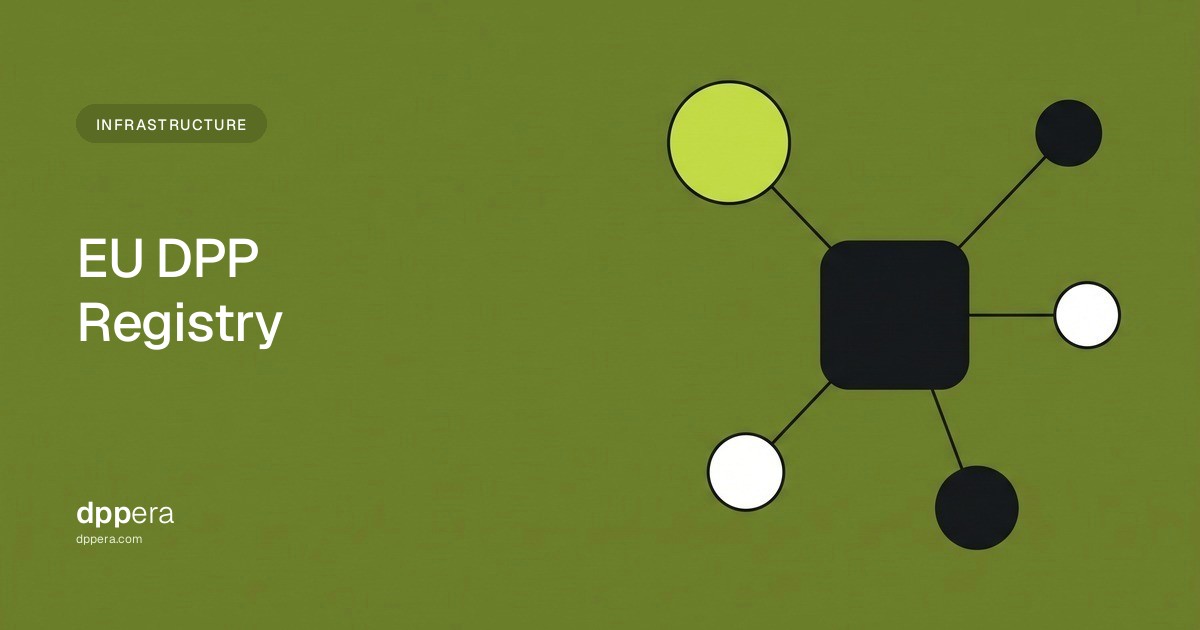
The registry (Article 13 ESPR) is the index layer of the DPP system. When passports become mandatory for a product category, every product placed on the EU market will have its unique identifier, a pointer to where its passport is hosted, and its commodity code registered there. Authorities and customs will use it to check, electronically, that a product entering the market has a valid passport.
Two things the registry is not:
- It is not a database of product data. Passport data stays decentralised - hosted by the manufacturer or a service provider of their choice. The registry stores identifiers and pointers, nothing more.
- It is not a new obligation. The launch of the registry did not make the DPP mandatory for anyone. Obligations arrive per product category, through delegated acts, each with at least an 18-month transition.
"DPP is mandatory from 2026" - no, it is not
You will see this claim in vendor marketing and even in some press. It confuses the infrastructure deadline (the Commission had to have the registry operational by 19 July 2026) with product obligations (which start with batteries on 18 February 2027 and reach most other categories in 2028-2030). If someone uses the registry launch to sell you an urgent compliance package, treat it as a red flag.
What the launch does change
- The system is real now. Registry live, CEN/CENELEC standards (EN 18219, EN 18220, EN 18222 among others) published, enrolment for organisations underway, a test environment available. The remaining unknowns are the per-category delegated acts - the what, not the whether.
- Customs enforcement has its backbone. ESPR Article 21 ties customs clearance to the registry: once a category's obligations apply, releasing goods for circulation will require a registration identifier that customs can verify. Non-EU producers and importers should read that sentence twice.
- The clock is now credible. Delays to EU IT projects are a perennial excuse for doing nothing. The registry shipping roughly on time removes it.
What to do about it
Nothing panicked - but two quiet moves are smart. First, check when your category is due: see the deadline timeline. Second, start structuring your product data (composition, suppliers, certificates); every pilot so far shows data collection, not technology, is the bottleneck. Our complete DPP guide covers what goes into a passport, category by category.

Łukasz Głuch
Builds DPPera, a digital product passport tool for small and medium-sized companies. Reads the delegated acts so you do not have to. Writes about what he checked in the registry, not about what vendors promise.
LinkedIn